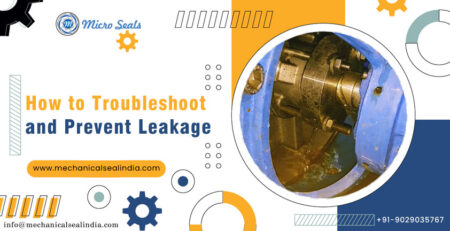
You scheduled the downtime. Your maintenance team carefully pulled the pump apart. You installed a brand-new mechanical seal — the right size, from a trusted manufacturer. You restarted the system.
And then… drip. drip. drip.
The pump is leaking again. From the exact same spot.
The hard truth? The problem is almost never the seal itself.
Modern mechanical seals are precision-engineered components. When a brand-new, correctly sized seal leaks immediately or fails within days of installation, the root cause almost always lies somewhere else — in the pump’s mechanical condition, the installation process, or the operating environment.
In this guide, we will walk you through the 8 most common reasons your pump keeps leaking even after a mechanical seal replacement, how to diagnose each one, and what you can do to permanently fix the problem.
8 Real Reasons Your Pump Is Still Leaking After Replacing the Mechanical Seal
Table of Content
Shaft Misalignment — The Most Overlooked Cause
What it is: Shaft misalignment occurs when the pump shaft and motor shaft are not perfectly aligned along their rotational axis. Even a misalignment of 0.05 mm can cause problems.
Why it causes seal failure: Misalignment forces the seal faces to operate at an angle instead of flat against each other. This creates uneven contact pressure, leading to localised heat buildup, accelerated wear, and ultimately leakage.
Signs to look for:
- Vibration or unusual noise after startup
- Uneven wear pattern visible on the removed seal face
- Seal fails repeatedly in the same short time frame
Fix: Use a laser alignment tool during reinstallation. Do not rely on visual checks or straightedges alone. Laser alignment should be a standard step in every pump overhaul, not an optional one.
Important: Even if the pump was aligned correctly before, re-check alignment after every maintenance activity. Bolt tightening, pipe reconnection, and thermal expansion can all shift alignment.
Incorrect Seal Selection
What it is: Installing a seal that does not match the actual operating conditions of the pump — even if it physically fits.
Why it causes seal failure: Mechanical seals are engineered for specific combinations of temperature, pressure, fluid type, and shaft speed. A seal rated for water service will fail rapidly in a chemical application. A standard elastomer will degrade quickly if the process fluid is a solvent or acid.
The common mistake: Many procurement teams select replacement seals purely based on dimensional match — shaft diameter and housing bore. They do not account for:
- Process fluid chemical compatibility
- Operating temperature range
- Shaft speed (RPM)
- Pressure rating (balanced vs. unbalanced seal requirement)
Fix: Always share the complete pump datasheet and process fluid information when selecting a replacement seal. At Micro Seals, our engineers help customers select the correct seal type based on actual application requirements — not just dimensions.
For a wide range of application-specific seals, explore our Pump Mechanical Seals and Industrial Mechanical Seals product ranges.
Dry Running During Startup
What it is: Dry running occurs when a pump is started — even briefly — without liquid present around the seal faces.
Why it causes seal failure: Mechanical seal faces depend on a thin film of process fluid for lubrication and cooling. Without this fluid film, the faces make direct contact and generate intense frictional heat within seconds. This can permanently damage or distort the seal faces before the pump has even reached full operating speed.
This is one of the most destructive and irreversible forms of seal damage. A seal that has experienced even 30 seconds of dry running may look visually intact but will leak at normal operating conditions.
Common scenarios where this happens:
- Pump is started without priming
- Air pocket is present in the suction line
- Seal flush system is not activated before startup
- Pump is run during line flushing or commissioning without proper fluid
Fix: Always prime the pump before startup. Verify that the seal chamber is filled with liquid before energising the motor. If your application involves intermittent or low-flow conditions, consider upgrading to a Cartridge Mechanical Seal with a built-in seal support system.
Installation Errors
What it is: Mistakes made during the physical process of fitting the mechanical seal — even by experienced technicians.
Why it causes seal failure: Mechanical seals have extremely tight tolerances. A small error during installation can compromise the seal immediately or cause it to fail within a short period.
The most common installation mistakes include:
- Touching the seal faces with bare hands: Oils and salts from skin contaminate the lapped seal face and create microscopic high spots that prevent proper seating. Always handle seal faces with clean lint-free gloves.
- Incorrect compression setting: Every mechanical seal has a specified installation length (compression). Installing the seal too tight increases face load and heat; too loose reduces sealing force. Always verify with the manufacturer’s drawing.
- Damaged O-rings during assembly: O-rings can be nicked, rolled, or twisted during installation, creating secondary leak paths. Inspect every O-ring before assembly.
- Contaminated seal faces: Even a dust particle between the faces can cause leakage. Clean all faces with fresh solvent before assembly.
- Wrong installation direction: Some seals are directional. Installing a seal backwards is a common error that is surprisingly easy to make under time pressure.
Fix: Follow the manufacturer’s installation drawing precisely. Use a torque wrench for gland bolts. Consider investing in a Cartridge Seal — these are pre-set at the factory and eliminate most installation errors.
Cavitation in the Pump
What it is: Cavitation is the formation and violent collapse of vapour bubbles inside the pump, caused by pressure dropping below the fluid’s vapour pressure.
Why it causes seal failure: The energy released when cavitation bubbles collapse is enormous. This creates intense shock waves and vibration that are transmitted directly to the mechanical seal. Over time, cavitation causes:
- Erosion of the pump impeller and casing
- Excessive shaft vibration
- Fluctuating pressure in the seal chamber
- Premature seal face wear and leakage
Signs of cavitation:
- Loud rattling or crackling noise from the pump (described as “gravel in the pump”)
- Fluctuating discharge pressure
- Reduced pump performance
- Erratic power consumption
Fix: Cavitation is a system-level problem, not a seal problem. Replacing the seal without addressing cavitation will only result in another seal failure. Check Net Positive Suction Head (NPSH), inspect the suction line for restrictions, and ensure the pump is operating within its design range.
Excessive Vibration from Worn Bearings
What it is: Pump bearings support the shaft and keep it running true. As bearings wear, they allow the shaft to wobble and move radially.
Why it causes seal failure: A mechanical seal is designed to operate with minimal shaft movement. When worn bearings allow the shaft to deflect, the seal faces cannot maintain consistent contact. The result is intermittent separation of the seal faces — which allows fluid to pass through — followed by violent impact as the faces slam back together. This combination rapidly destroys the seal faces.
Critical insight: In many cases, a mechanical seal that appears to have failed is actually telling you that the pump bearings need replacement. The seal failure is a symptom, not the cause.
Signs of bearing wear:
- Elevated bearing housing temperature
- Audible bearing noise (rumbling, grinding)
- Visible shaft play when manually checked
Fix: Always inspect and, if necessary, replace pump bearings as part of any mechanical seal replacement. Treat it as a standard part of the overhaul — not as an optional extra.
Incorrect Seal Chamber Pressure or Flush System Issues
What it is: Many pump applications require a seal support system — such as a flush, quench, or barrier fluid arrangement — to maintain proper conditions at the seal faces. If this system is not set up correctly, even a perfect seal will fail.
Why it causes seal failure: Seal support systems are designed to:
- Keep the seal faces cool and lubricated
- Prevent process fluid contaminants (solids, gases) from reaching the seal faces
- Maintain a positive pressure differential that keeps the seal functioning correctly
If the flush line is blocked, the flow rate is insufficient, or the system is operating at the wrong pressure, the seal faces are exposed to conditions they were never designed for.
This is especially critical for:
- High-temperature applications
- Slurry or abrasive fluid pumping
- Chemical or corrosive fluid applications
- API 682 Plan arrangements
For applications requiring reliable seal support, explore our Seal Support System range, including Heat Exchangers and Cyclone Separators.
Fix: Verify that the seal support system is functioning correctly before and after every seal replacement. Confirm flush flow rates, pressures, and fluid compatibility.
Operating the Pump Outside Its Design Parameters
What it is: Running the pump at flow rates, pressures, or temperatures that are outside the range it was designed for.
Why it causes seal failure: When a pump operates far from its Best Efficiency Point (BEP) — either in an excessive flow (overload) or insufficient flow (recirculation) condition — it generates abnormal forces within the pump casing. These forces are transmitted to the shaft, creating radial loads and vibration that the mechanical seal cannot handle.
Common scenarios:
- Pump is oversized for the application and constantly throttled
- System demand has changed since the pump was originally installed
- Pump is used for intermittent, high-cycle operation it was not designed for
- Discharge valve is frequently operated near the closed position
Fix: Review the pump’s performance curve and confirm the operating point. If the pump is consistently operating far from its BEP, a system redesign or pump replacement may be more cost-effective than repeated seal replacements.
Quick Diagnosis Checklist
Use this checklist the next time a pump seal fails prematurely:
| Check | What to Inspect | Tool Required |
| Shaft Alignment | Coupling alignment between pump and motor | Laser alignment tool |
| Bearing Condition | Play, noise, temperature | Manual check + thermometer |
| Installation Quality | Seal face condition, O-ring integrity, compression setting | Visual + calipers |
| Dry Running Risk | Priming procedure, suction conditions | Operational review |
| Cavitation | Noise, pressure fluctuation, NPSH margin | Pressure gauge + review |
| Seal Selection | Fluid compatibility, temperature, pressure, speed rating | Application datasheet |
| Seal Support System | Flush flow, pressure, fluid condition | Flow meter + pressure gauge |
| Operating Point | Pump curve vs. actual flow and head | Flow meter + pressure gauge |
Conclusion
If your pump is leaking after replacing the mechanical seal, the seal itself is rarely the culprit. The most likely cause is one of these eight systemic issues: shaft misalignment, incorrect seal selection, dry running, installation errors, cavitation, worn bearings, seal flush system problems, or off-BEP operation.